This is one of those passages where what it doesn't say is as important as what it does.
"When the LORD your God brings you into the land you are entering to possess and drives out before you many nations ... Make no treaty with them, and show them no mercy. Do not intermarry with them. Do not give your daughters to their sons or take their daughters for your sons ..." (Deut 7:1-3).
First, what it doesn't say.
How do you know whether you really love God? This is the issue addressed in Deuteronomy 6.
Moses gives the familiar "Great Commandment": "Love the LORD your God with all your heart and with all your soul and with all your strength" (Deut 6:5).
In short, love God with all you are. But what does it mean to love God with all that you are?
Moses elaborates:
"These commandments that I give you today are to be on your hearts. Impress them on your children."
"When the LORD your God brings you into the land he swore to your fathers ... be careful that you do not forget the LORD, who brought you out of Egypt, out of the land of slavery."
"Fear the LORD your God, serve him only and take your oaths in his name."
"Be sure to keep the commands of the LORD your God and the stipulations and decrees he has given you."
These things aren't just more commandments. They're explanatory. They show what it looks like to "love the LORD your God with all your heart and with all your soul and with all your strength."
Today it's common to try and dissect the Great Commandment, to explain what it means to love YHWH with all your heart versus all your strength. That's OK, but in many ways it's missing the forest for the trees. The point is that you are to love your God with all that you are. And this is what that looks like: Obeying God's law, meditating on it, passing it on to the next generation, and living in light of what God has done for you.
To God, love = obedience.
Or as one person put it, God's love language is obedience.
This shouldn't be new to us. Jesus said, "Anyone who loves me will obey my teaching" (John 14:23). James said true religion is "to look after orphans and widows in their distress and to keep oneself from being polluted by the world" (1:27). It's not how you feel; it's what you do.
Actions speak louder than words, right? A man who says he loves his wife yet can't be bothered to "forsake all others" doesn't really love his wife. A man who says he loves God but has no interest in obeying his commandments doesn't really love God.
Do you really love God?
God is scary.
Deuteronomy 5 continues the history lesson. Moses reminds the people of the 10 Commandments and that they heard God himself speak to them at Horeb. And he reminded them of their response:
"The LORD our God has shown us his glory and his majesty, and we have heard his voice from the fire. ... This great fire will consume us, and we will die if we hear the voice of the LORD our God any longer. For what mortal has ever heard the voice of the living God speaking out of fire, as we have, and survived? Go near and listen to all that the LORD our God says. Then tell us whatever the LORD our God tells you. We will listen and obey" (v 24-27).
God. Is. Scary.
If it seems like I'm returning to this idea a lot lately, it's because I am. And I'm doing it for two reasons: 1) the Bible emphasizes it a lot, but 2) people today want to forget it. We don't want to think of God as scary. God is our big daddy-in-the-sky who just wants us to be happy. Like a lot of lies, there is an element of truth in that, but a partial truth taken as the whole truth is always a problem.
In the Bible, meeting God is never less than shattering. He's accompanied by "a thick and dreadful darkness" (Gen 15:12, Psalm 97:2). People who encounter him fear for their lives (eg, Is 6:5, Jdg 6:22). Even our "gentle Jesus, meek and mild" was scary when his power was revealed (Mark 4:41, Luke 5:8).
People get scared when they get a real taste of who God is. And God's response:
"I have heard what this people said to you. Everything they said was good. Oh, that their hearts would be inclined to fear me and keep all my commands always, so that it might go well with them and their children forever!" (Dt 5:28-29).
What does God say? "Good. If only they would stay scared, it would keep them out of trouble."
We serve a holy holy holy God of immeasurable power and finite patience. God made everything out of nothing; he could just as easily make nothing out of everything. We should be a little scared. Not a constant terrified quaking in our boots that he's going to squash us, but a realization that we really do deserve to get squashed and it's only his enormous patience that preserves us. It should drive us to repentance and to strive to do better, to be better.
Because our God isn't safe. But he's good. And he's the King.
-------
Related:
Fearing God
What Does It Mean to Fear the LORD?

The fourth chapter of Deuteronomy continues the history lesson we saw in the first three chapters with a particular focus on what they saw of God.
"You saw with your own eyes what the LORD did at Baal Peor. The LORD your God destroyed from among you everyone who followed the Baal of Peor..." (4:3). Remember how God treated your brothers who worshiped other gods. Remember that God will not accept that behavior.
"Only be careful, and watch yourselves closely so that you do not forget the things your eyes have seen or let them fade from your heart as long as you live. Teach them to your children and to their children after them" (4:9). Don't forget. Don't let your children forget.
"Remember the day you stood before the LORD your God at Horeb ... You saw no form of any kind the day the LORD spoke to you at Horeb out of the fire" (4:10, 15). Remember that God never showed you an image. So do not make one. You cannot represent him as a man or an animal or any other creature. If you make any representation, it is not of God; it will be idolatry. Remember Baal Peor.
"Be careful not to forget the covenant of the LORD your God that he made with you; do not make for yourselves an idol in the form of anything the LORD your God has forbidden" (4:23) Why?
"For the LORD your God is a consuming fire, a jealous God" (4:24).
A consuming fire. I like the NRSV: "a devouring fire."
Fire is one of mankind's greatest tools. We take it for granted today, but it once kept us alive. It allowed us to create heat and light. It let us cook food and construct containers. It purifies water. It kindles the imagination.
And it destroys everything in its path. Its appetite is insatiable. When fire rages out of control, it is one of man's deadliest enemies.
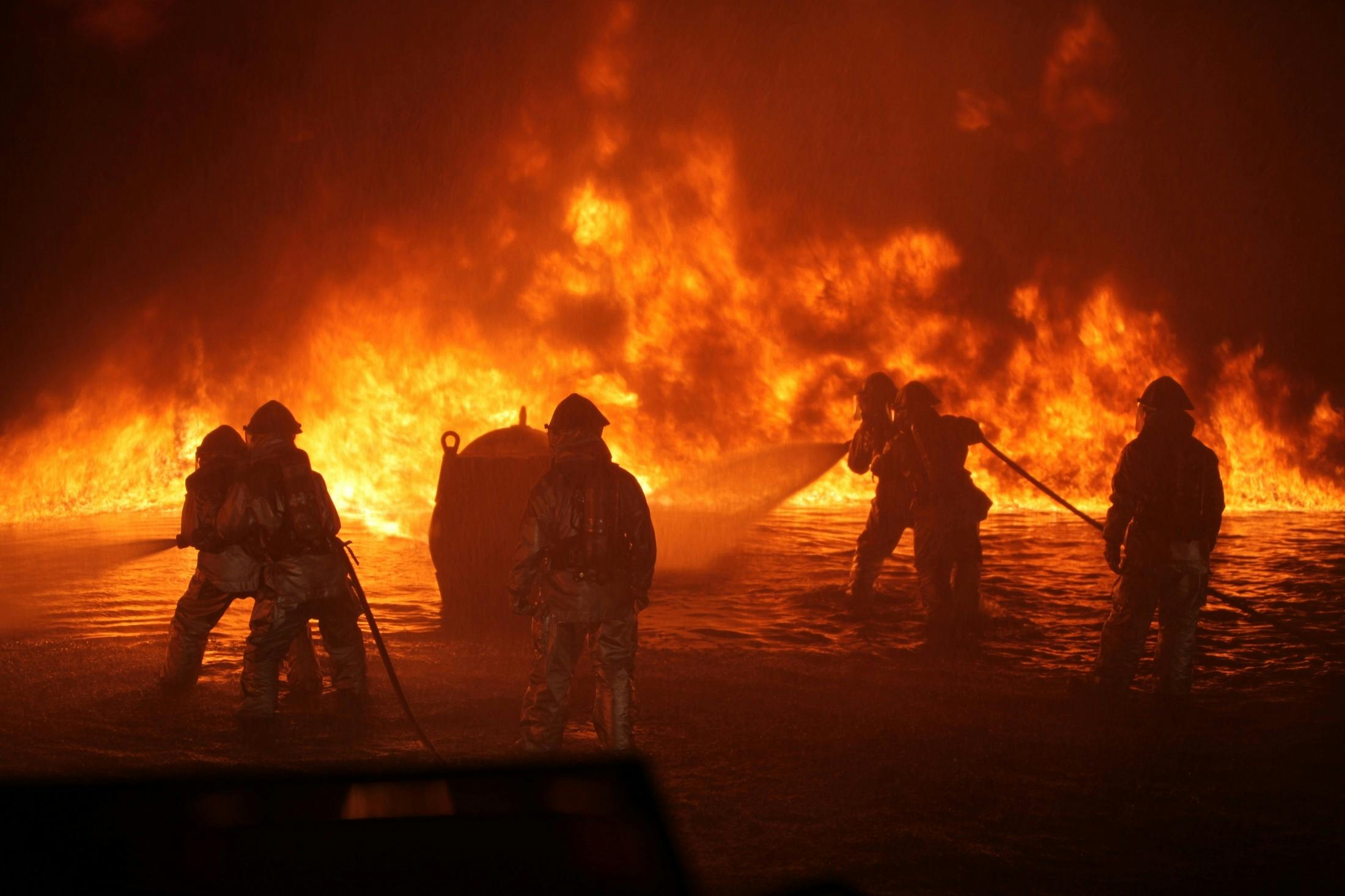
When God's people worship other gods, HE is man's deadliest enemy.
"I am the LORD; that is my name!
I will not yield my glory to another
or my praise to idols" (Is 42:8).
God doesn't share. He had redeemed his people. He had bestowed on them amazing blessings. He had made a place for himself among them. He demanded that be respected. He demanded to be treated as holy. Like any husband, he expected that his bride would forsake all others.
God doesn't change. He is just as jealous for his name today as he was then. He is just as determined that his people will treat him with the proper faithfulness and respect today as he was then. He expects his bride to be faithful.
The Church must never forget that this God is our Lord Jesus Christ. He is still a consuming fire. He still demands to be regarded as holy. He still demands that we be faithful. And he still punishes sin.
But with God there is mercy.
"After you have had children and grandchildren and have lived in the land a long time—if you then become corrupt and make any kind of idol, doing evil in the eyes of the LORD your God and arousing his anger ... The LORD will scatter you among the peoples ... But if from there you seek the LORD your God, you will find him if you seek him with all your heart and with all your soul" (4:25-29).
The Lord will punish. But he will also forgive.
"For the LORD your God is a merciful God; he will not abandon or destroy you or forget the covenant with your ancestors, which he confirmed to them by oath" (4:31).
God is a merciful God. And he keeps his promises.
God's grace is always greater than our sin. It's not an excuse to sin. It's not something we should presume upon. It's not something we should take for granted.
But it is something we can depend upon. It is something we should take as assured. God is never surprised by our sin, and he's always ready to receive the penitent sinner.
The church today needs to remember that our God expects our complete faithfulness, that his patience will eventually come to an end. And that he forgives the repentant sinner.
------
See also: Justly Jealous
I love the Old Testament because it paints such a clear picture of who God is. The Law (the first five books) is fundamental both in how it establishes God's character and in how so much of the rest of the OT (and, ultimately, the NT) are built upon what it teaches. Familiarity with the Law makes the rest of the OT much clearer.
So let's spend some time in Deuteronomy. As with Leviticus, I'm not going to do anything deeply systematic. I'll alight upon whatever catches my attention.
The first three chapters of Deuteronomy are history. The story begins while Israel is at Horeb. God told them it was time to go take the Promised Land. And Israel said, "Are you crazy? Have you seen those guys? They're huge!"
To make a short story shorter, it didn't go well for them. So they were sent to wander in the desert for 40 years. But even then, when God was angry at them, he provided for them, protected them, and gave them victory over enemies. The text retells of kings who were defeated and lands that were taken — the first lands to be given the new nation of Israel, beginning the fulfillment of the promise that Abraham's children would possess Canaan and become a great nation. Then it says ...
"Now, Israel, hear the decrees and laws I am about to teach you" (Deut 4:1).
This God's pattern. He gives, then he demands. He requires obedience only after blessing.
He gave Adam and Eve all of the garden. Oh, but there's this one rule ... (Gen 2:16-17).
He brought Noah and his kin through the flood. He promised to never bring another like it. Then he established some rules (Gen 9:1-6).
The Ten Commandments begin with "I am the Lord your God, who brought you out of Egypt, out of the land of slavery" (Ex. 20:2).
This is God's pattern. It is a pattern that continues in the New Testament. Paul spends 11 chapters of Romans expounding on God's mercy and salvation before finally getting to "Therefore, I urge you, brothers and sisters, in view of God’s mercy, to offer your bodies as a living sacrifice, holy and pleasing to God ..." (Rom 12:1).
God requires. Oh my does he have requirements. But he only lays them on us after blessing us more than we ever could have imagined. In Christ we have been given every "every spiritual blessing" so "I urge you to live a life worthy of the calling you have received" (Eph 1:3, 4:1).
God lays a burden on his people. No one denies that. Even if his "burden is light," it's still a burden. But it is only laid on those whom God has lavished with love. Sometimes we're going to chafe against the rules. We operate under restrictions that the rest of the world aren't bound by. It can seem unfair.
But God is no miser. He is not Scrooge, demanding a long day's work for a pittance and a single lump of coal. He is the God who gives and gives and asks only that we respond to his generosity with loving obedience.
Part of Seeing God in Deuteronomy


